Taunton, MA
Basement Waterproofing in Taunton, MA
Call 774-500-2975 to describe what you have noticed, or Get a Free Estimate to request an estimate.
Understanding Basement Moisture in Taunton
A damp basement can affect storage, finished rooms, and confidence in the rest of the home. Basement Waterproofing Taunton helps Taunton property owners understand where moisture is coming from and what kind of work may address it. We begin with the signs you see, the conditions around the foundation, and the basement’s current drainage. From there, we explain relevant options such as sump pump service, interior drainage, crack repair, exterior waterproofing, wall moisture barriers, and mold remediation. Each recommendation should have a clear purpose tied to the observed condition.
Homeowners deserve to understand the source of a basement problem and the reasoning behind a proposed repair. Our approach centers on careful observation, a written scope, and straightforward discussion of the work area, system components, discharge route, and maintenance. We do not assume that a coating, pump, or drain is the right answer until the conditions support it. That makes it easier to compare options, plan for the work, and know what to watch after installation.
A helpful assessment follows the evidence in a clear order. First, we listen to your description and establish where the issue occurs, how often it returns, and what weather or household events seem connected. Next, we inspect accessible foundation surfaces, the floor perimeter, windows, sump basin, pump, and discharge route. Outside, we look at downspouts, visible grading, paved areas, and obvious drainage obstructions. These observations do not replace a structural or plumbing evaluation when one is needed, but they help separate a foundation water concern from other likely causes.
We then explain what we can see and where there is uncertainty. If there are several possible sources, we identify which checks could narrow the cause before work is planned. A recommendation should connect the observation to a specific action: for example, repairing a suitable crack, improving water collection at an affected wall, servicing a sump, or managing vapor on a prepared surface. We explain the area covered, how the work will be accessed, and what homeowner maintenance may follow.
You can use the visit to ask practical questions. Ask what evidence supports the recommendation, whether the work affects the full basement or one section, and what happens to collected water. If a system needs electricity, learn how it operates and what backup planning may be available. If the basement has finished walls, flooring, storage, or sensitive equipment, discuss protection and access in advance. The goal is for the written plan to make sense to the people who live with the system after installation.
Once a moisture source is understood, day-to-day habits can help keep the basement easier to monitor. Keep the sump lid and service area reachable, avoid stacking boxes against walls where a damp mark could go unnoticed, and check visible discharge points after major storms. Gutters and downspouts should be kept clear, with runoff directed away from the foundation in a way that suits the property. These steps support a waterproofing plan, but they are not a substitute for repairing a recurring leak or failed component.
Stored belongings benefit from simple precautions. Use shelving or raised storage where appropriate, keep important papers and valuables away from basement floors, and avoid placing items directly against a wall that has shown moisture. If you use the basement as a living or work area, maintain reasonable indoor humidity and leave access to mechanical equipment. A dehumidifier can assist with humid air, while ventilation and temperature patterns may also affect condensation. When odor or dampness persists, investigate rather than masking it with fragrance or paint.
After any repair, keep a record of the work area and note how the basement responds during the next periods of heavy rain and seasonal thaw. A quick visual check of the pump basin, float movement, and discharge outlet can reveal changes early, provided it can be done safely. Follow the maintenance guidance for the specific equipment installed. If a new wet spot appears, take a photo and note the date and weather. Clear records make follow-up more useful and help distinguish a new source from the condition that the original work addressed.
A basement that serves as a family room, office, laundry area, or workshop needs a plan that accounts for how the space is used. Before installation, identify furniture, stored belongings, wall finishes, flooring, and equipment that may need to be moved or protected. Waterproofing work can involve opening a portion of the slab, accessing a wall, or working around utilities. A clear scope should explain where that work occurs and what restoration is included so the household can plan around the project.
Finished surfaces can also hide evidence. A stain at a baseboard, a soft section of trim, or a recurring odor may indicate moisture behind a wall, but those signs alone do not identify the source. The assessment should consider visible symptoms alongside the exterior and drainage conditions. If opening a finished section is necessary to understand the problem, discuss why, how much access is expected, and who is responsible for putting the area back together. Where mold is suspected, avoid disturbing a broad area before an appropriate plan is in place.
Think about future access when choosing a layout. Pumps, basin covers, cleanouts, and drainage connections should remain serviceable rather than disappearing behind permanent storage or cabinetry. A finished basement can still include practical access points that blend into the room. Ask how to locate them, what routine attention they need, and whom to contact if the system sounds or behaves differently. Planning for access protects the usefulness of both the waterproofing equipment and the room itself.
About Basement Waterproofing Taunton
We help Massachusetts homeowners make sense of basement moisture with practical observations and clear explanations. Our work starts by understanding the home and the water’s path.
We see basement waterproofing as a problem-solving trade. A damp wall, a failing pump, and a musty finished room can look related while needing different responses. We take time to connect visible signs with the foundation, drainage, and conditions around the home, then explain which work is meant to address which part of the problem.
Massachusetts homes reflect generations of building styles, changing weather, rocky and low-lying landscapes, and neighborhoods shaped by rivers and industry. In Taunton and nearby communities, that variety makes listening and looking closely essential. We aim to bring a steady, local perspective to the work: respect the property, communicate clearly, and leave the homeowner understanding the system and its care.
More about us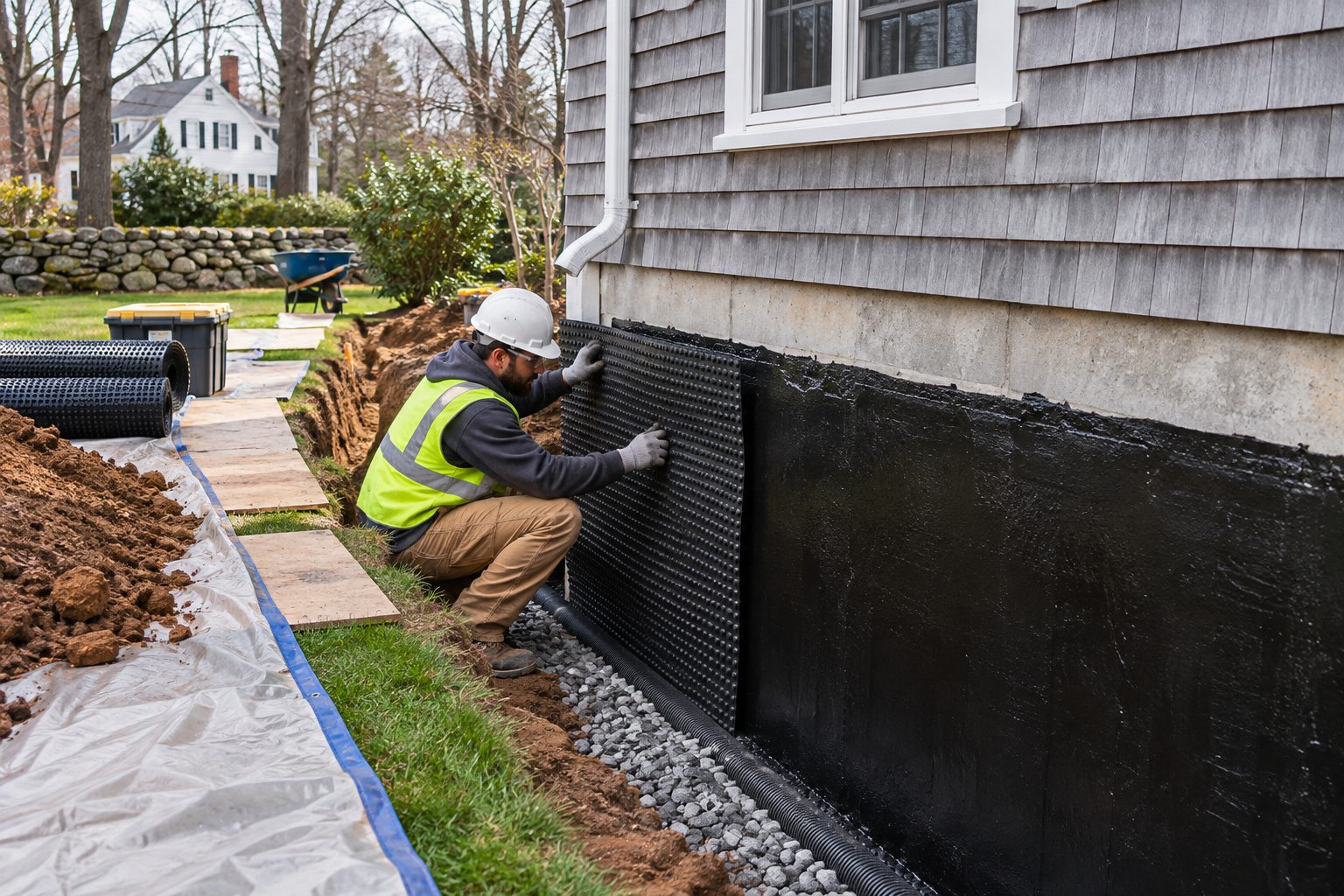
Our Services
Basement moisture is not one problem with one universal fix. Water entering at a wall-floor joint may call for a different response than a crack, a failed pump, or condensation on a cold surface. We talk through the distinction in plain language and describe what each service is designed to do. The goal is a practical plan that works with your foundation, access, yard, and use of the space. Available services include sump pump installation and repair, interior drainage systems, foundation crack repair, exterior waterproofing, wall vapor barriers and sealants, and mold remediation. The right combination depends on the source and route of moisture.
Sump Pump Installation And Repair
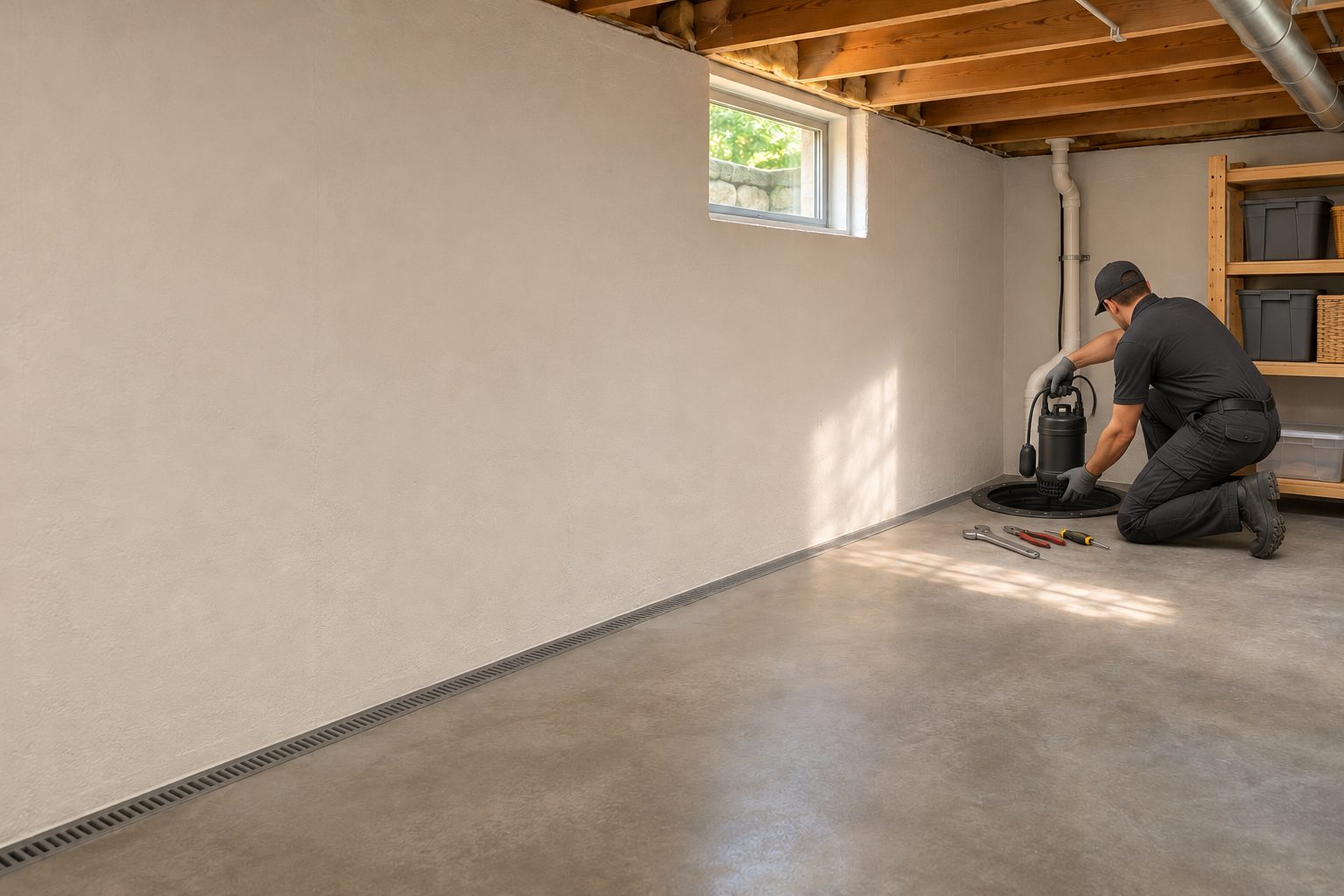
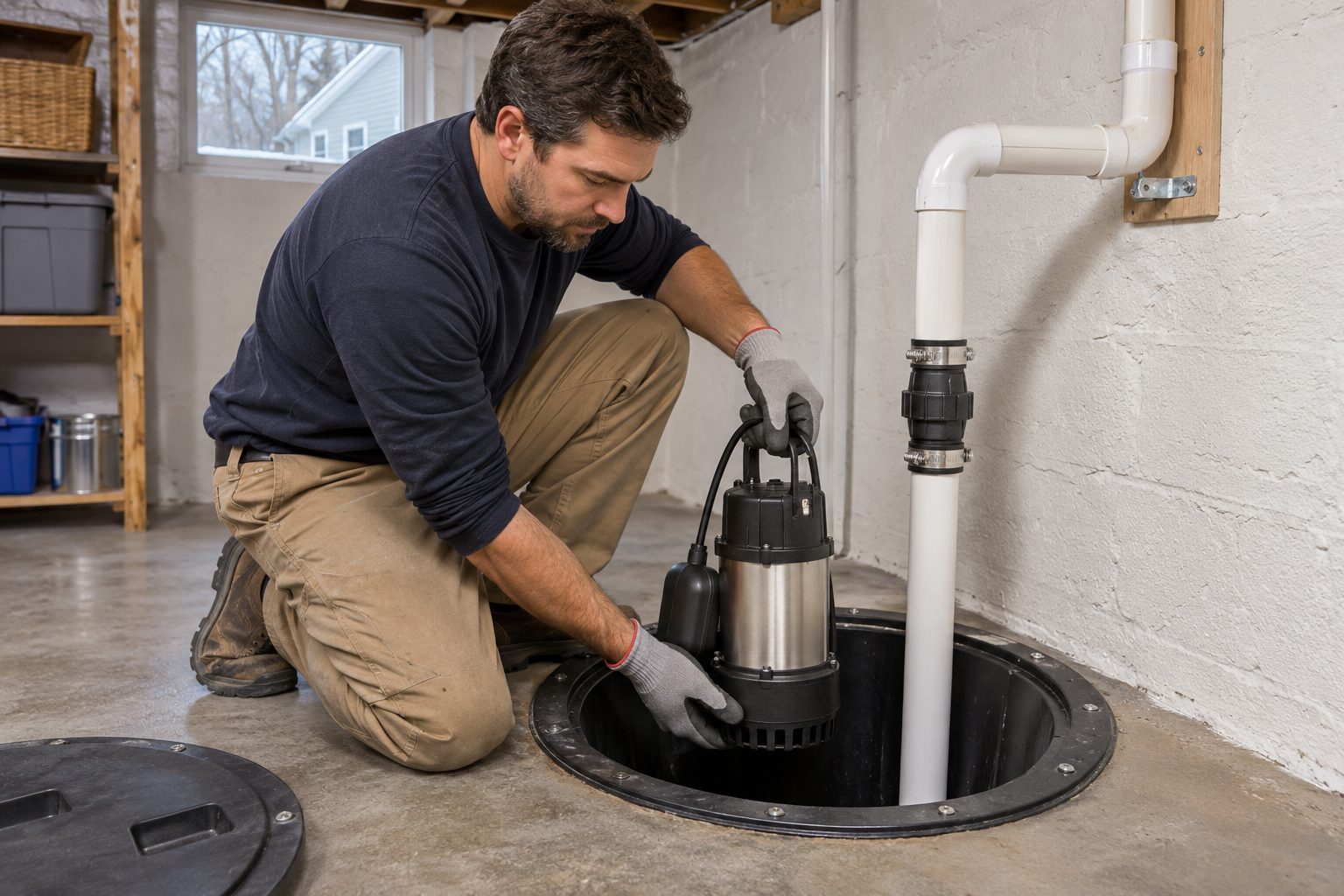
Installation and repair for sump basins, pumps, check valves, and discharge lines, with attention to how water leaves the property.
Learn more →Interior Drainage Systems
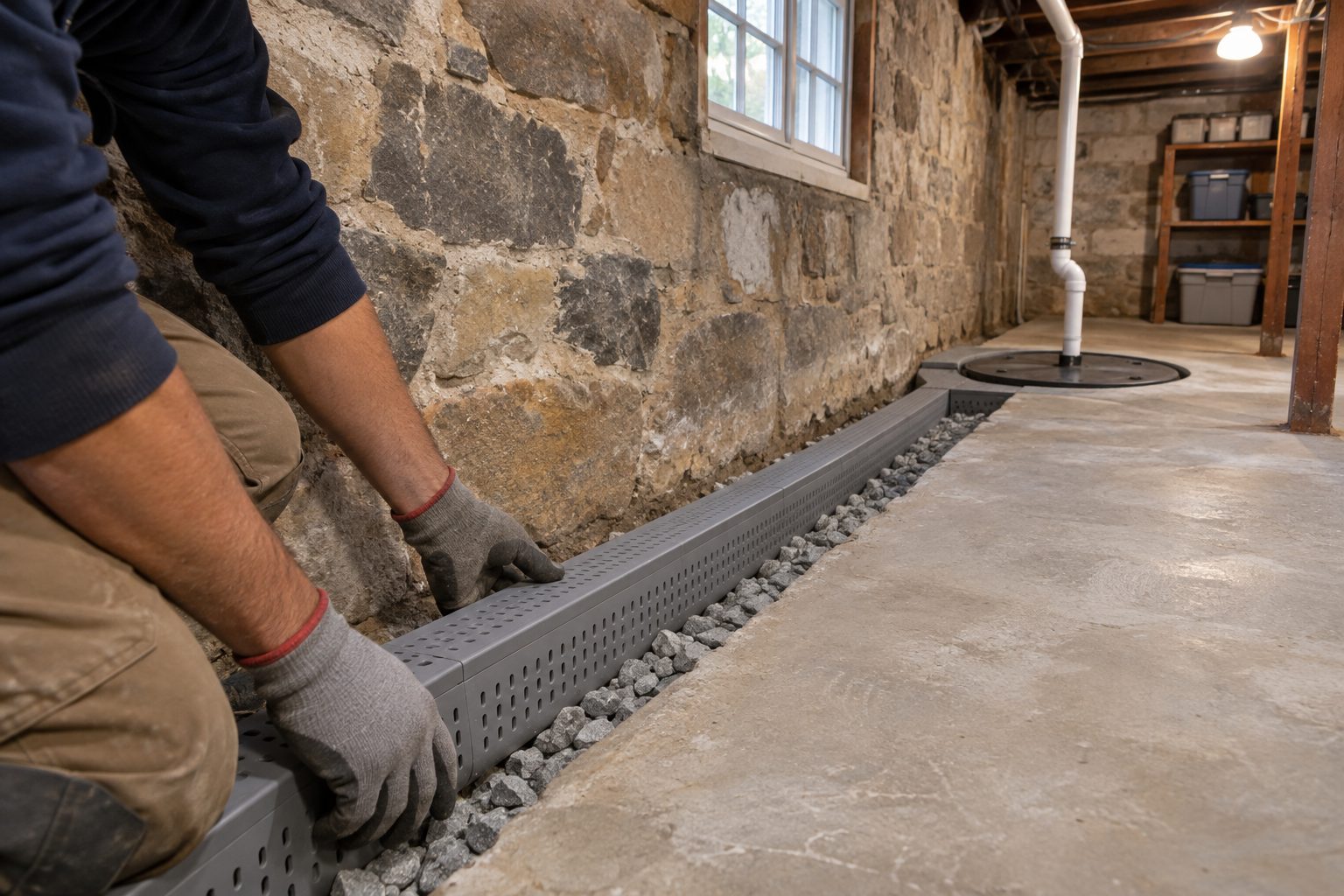
Interior channels that collect seepage along the wall-floor joint and direct it to a sump basin for discharge.
Learn more →Foundation Crack Repair
Targeted sealing for suitable foundation cracks, with an assessment of crack type, moisture path, and any sign of movement.
Learn more →Exterior Waterproofing
Outside foundation work that addresses moisture before it reaches the basement, including excavation, protective layers, and drainage details where practical.
Learn more →Wall Vapor Barriers And Sealants
Vapor barriers and sealants for suitable basement wall surfaces, applied after the moisture source and surface condition are assessed.
Learn more →Mold Remediation
Cleanup of affected basement materials, paired with correction of the moisture that allowed growth to start.
Learn more →Where We Serve You
Based in Taunton, the service area includes Raynham, Berkley, Dighton, Norton, Lakeville, Middleborough, Bridgewater, Easton, Freetown, Rehoboth, Mansfield, Attleboro, Seekonk, Somerset, Swansea, and Fall River.
See all service areas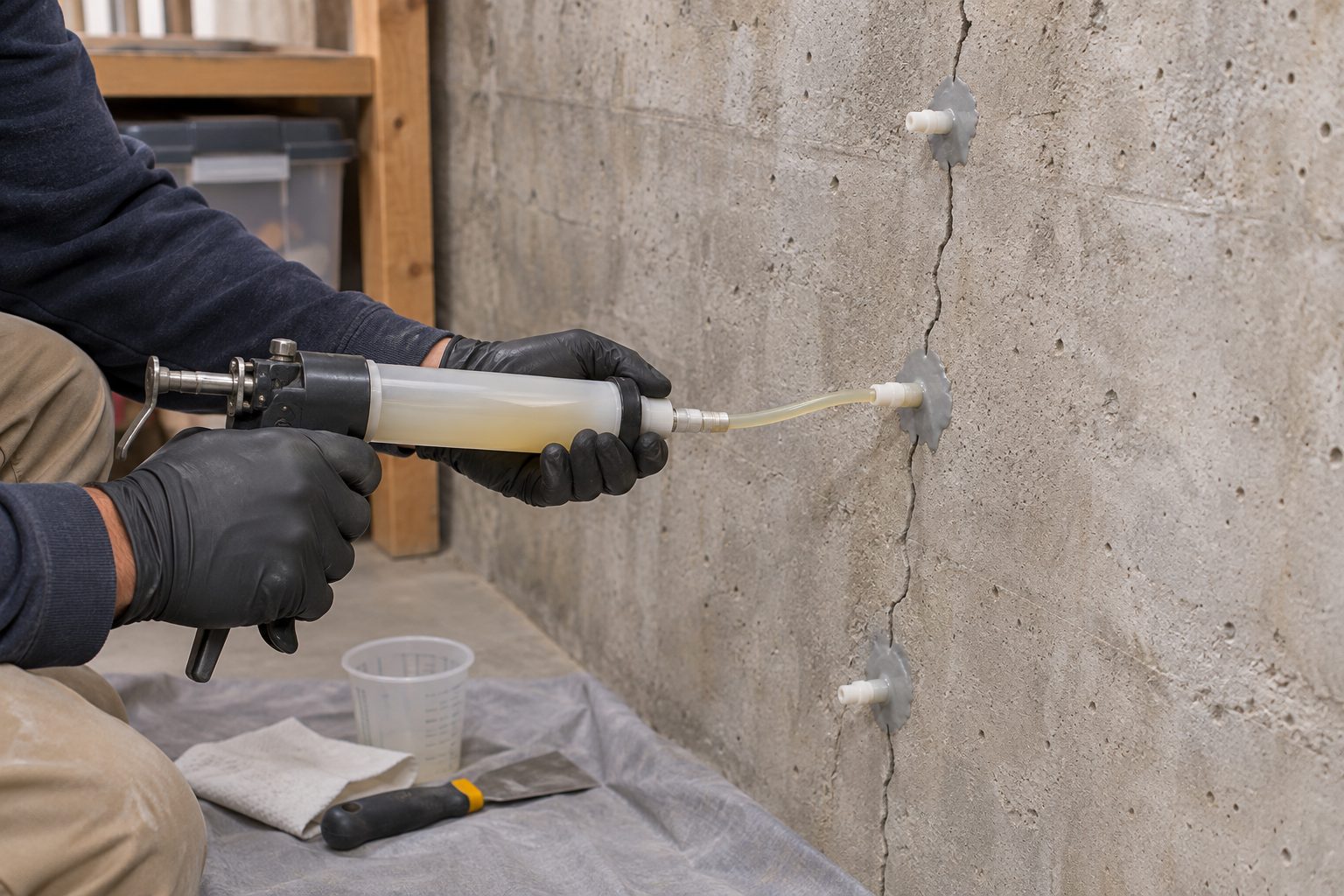
Why Choose Basement Waterproofing Taunton?
Careful observation comes first
We look at the signs, the foundation, and the existing drainage before discussing any repair.
A written scope for every job
Work areas, system components, and cleanup expectations are described in writing so options can be compared fairly.
Clear talk about each component
We cover the work area, discharge route, and maintenance so you know what the system is designed to do.
No default fix
A coating, pump, or drain is not recommended until the conditions in your basement support it.
How basement waterproofing works in Taunton homes
A waterproofing visit should begin with a careful look at where water appears, when it shows up, and what the surrounding ground is doing. In Taunton, a damp basement after a long rain can have a different cause from a puddle that appears during snowmelt or a musty smell that never goes away. We look for water tracks along the wall, dampness at the floor joint, staining around windows, failed sump equipment, and signs that water is coming through a crack. We also ask whether the problem is limited to one corner or moves around the room. Those clues help us discuss a solution that addresses the path of water instead of covering up the evidence.
Depending on the conditions, a plan may include an interior drainage channel that gathers seepage at the perimeter and carries it to a sump basin, a pump that moves collected water away from the foundation, or a targeted crack repair. Exterior work can help when the source is outside and excavation is practical. A wall barrier or compatible sealant may be useful for managing vapor on a sound surface, while mold cleanup belongs in a plan that also corrects the moisture source. These options solve different problems, so they should not be treated as interchangeable products.
Taunton has distinct areas shaped by the Mill River and Taunton River, with older urban blocks around the Green as well as later suburban development and homes near open land. That variety is one reason a visual assessment matters. A system that fits one basement may not fit a finished room, a shallow crawlspace, or a foundation with limited access. We explain the proposed route, discharge plan, equipment needs, and how the system can be serviced. Before work starts, you should know what the chosen approach is intended to do and what conditions it cannot correct.
Signs that moisture needs attention
A basement does not need to be visibly flooded to deserve attention. Look for a recurring damp strip where the wall meets the floor, white mineral deposits on masonry, peeling paint, rust on stored items, swollen trim, or a musty odor that returns after cleaning. Water can also show up as a dark patch that grows after storms, droplets on cold pipes, or dampness behind stored belongings. A sump that runs often, runs continuously, or fails to start is another reason to investigate. Keeping notes about rain, thawing, pump activity, and the location of wet spots can make a first conversation more useful.
It helps to distinguish water entering from outside from condensation forming on cool surfaces. Condensation can be related to humid indoor air, cold pipes, or poor air movement; a foundation leak can leave a recurring path, deposit, or localized wet area. More than one condition can be present at once. A dehumidifier may help manage indoor humidity, but it will not repair a failed drain, close a foundation opening, or remove water that continues to enter. Likewise, coating a wall without diagnosing pressure or seepage can leave the underlying issue unresolved.
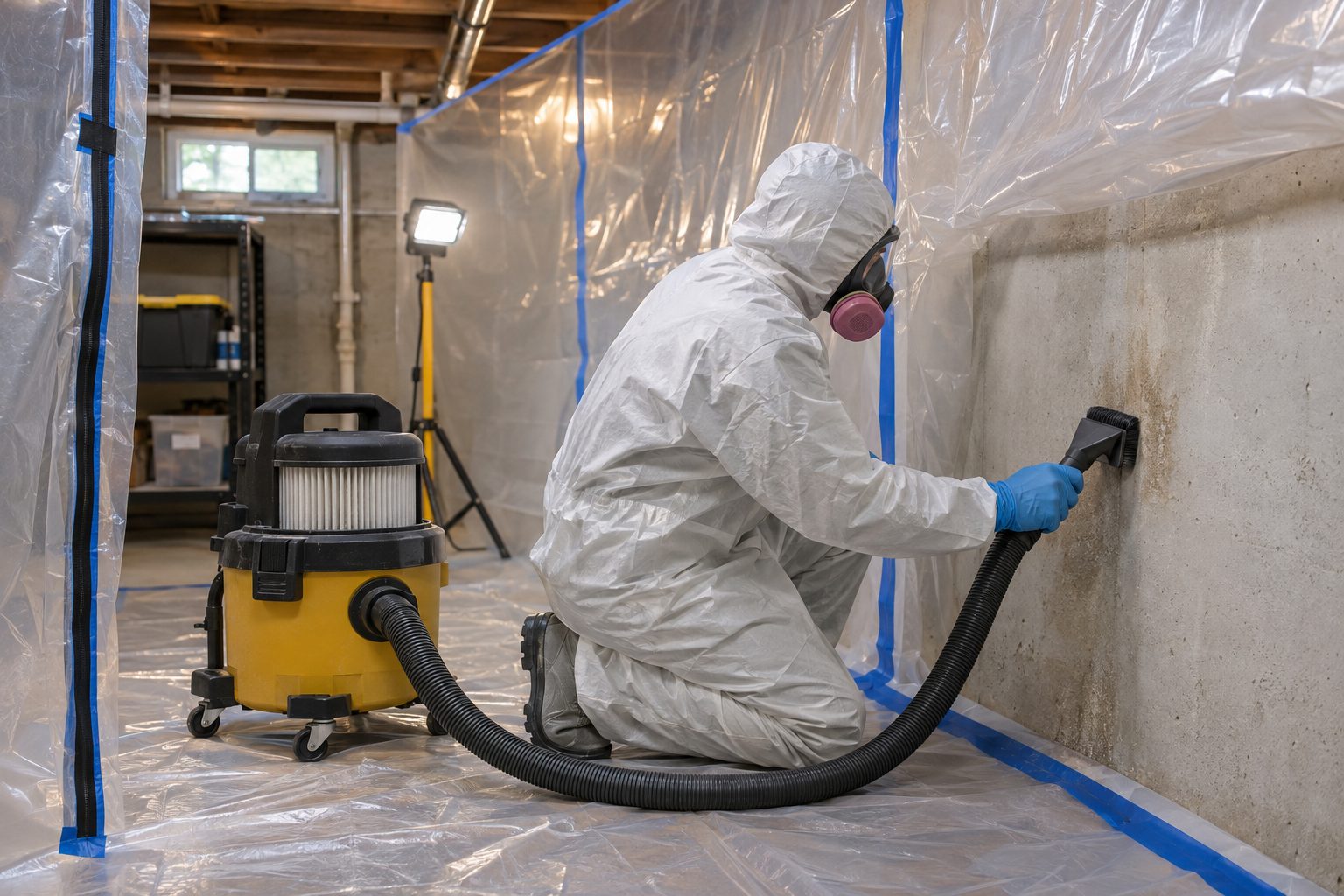
If you see mold, avoid disturbing a large affected area before understanding its extent and moisture source. Mold remediation should follow appropriate containment and cleaning practices, and the source of moisture needs to be corrected to reduce a return. If water is near electrical equipment, if a wall is moving, or if flooding is sudden and substantial, contact the relevant emergency or building professional promptly. For ordinary recurring dampness, document what you see and ask for an explanation of the cause, the recommended repair, and the maintenance it will need.
What shapes a waterproofing plan
The right work depends on how water reaches the basement, how much of the foundation is affected, and what access the property allows. A small, stable crack may call for a focused repair; water entering along a long wall-floor seam may call for a perimeter drainage approach. If the existing sump is undersized, unreliable, or poorly placed, the pump and basin deserve attention. Outside, grading, roof runoff, hard surfaces, buried utilities, landscaping, and the depth of the foundation can affect whether excavation is practical. Inside, finished walls, low ceilings, storage, mechanical equipment, and the condition of the slab influence installation details.
These details affect labor, materials, equipment, and the amount of restoration involved, which is why a responsible scope is based on an inspection rather than a generic package. Ask what sections of the basement are included, whether the work is a spot repair or a continuous system, where collected water will discharge, and whether the proposal includes cleanup or finish repair. If a pump is part of the plan, ask how it is powered, how a homeowner can recognize an issue, and what routine checks are recommended. If a sealant or barrier is proposed, ask what surface preparation it needs and whether it is intended to manage vapor, seepage, or both.
A useful proposal describes the observed conditions, the work sequence, and the intended result in plain language. It should also explain limitations. Waterproofing can control a defined water pathway, but it does not automatically correct structural movement, plumbing leaks, roof drainage, or humidity from every source. Clarifying the scope before work begins makes it easier to compare approaches and keep expectations realistic.
Taunton weather, waterways, and drainage
Taunton's setting makes water management a practical concern for many property owners, but local context should guide questions rather than substitute for an inspection. The city’s neighborhood history follows waterways and mill sites, and its planning materials identify river corridors, low-lying areas, and the Hockomock Swamp landscape in the northeast. Heavy rain, frozen ground, spring thaw, and blocked exterior drainage can each change how water behaves around a particular foundation. Two nearby homes can still have different soil, grading, footing-drain, and renovation histories.
Start outside by checking whether downspouts release close to the foundation, whether soil slopes toward the house, and whether patios or walkways direct runoff toward a wall. Do not make major grading changes without considering neighboring properties and local requirements. Inside, note whether moisture appears during a specific weather pattern and whether it is on the wall, slab, or both. If your home is near a river or in a mapped flood area, review official local flood information and discuss the site conditions with an appropriate professional. A basement system is not a substitute for flood planning or emergency preparedness.
Older homes around downtown, Church Green, Whittenton, and Weir Village may have masonry or construction details that differ from newer homes in outlying neighborhoods. Historic materials and finished basements call for careful choices about preparation and repair. We use the visible conditions and homeowner observations to develop the discussion, then explain how the recommended work fits the space. The goal is a dry, usable basement with a defined path for water control and a system the owner can understand.
Choosing a basement waterproofing company
When comparing waterproofing providers, focus on the quality of the diagnosis and the clarity of the proposed work. A useful visit should include questions about when water appears, what has already been tried, and whether plumbing or roof drainage could be involved. The person assessing the basement should be able to point out the observed evidence and connect it to the recommended scope. Be cautious about any explanation that relies on a one-size-fits-all fix without discussing the source, route, access, or discharge for the water.
Ask for a written description of the work area, materials or system components, sequence, cleanup expectations, and any homeowner maintenance. Find out whether the work includes a pump, basin, drainage channel, crack treatment, exterior excavation, vapor barrier, or mold-related work, and make sure each item has a clear purpose. For water collection systems, discuss the discharge location and what happens during a power interruption. For crack work, ask what type of crack the method is intended for and whether movement or structural review needs to be considered. For mold, ask how the moisture source and affected materials will be handled.
A good conversation leaves room for questions and makes limits understandable. You should be able to tell what problem the work addresses, what it does not address, and how to monitor the result. Compare written scopes, not just broad labels. If the basement is finished or the house has historic materials, discuss protection and restoration before scheduling. Basement Waterproofing Taunton is here to make that process straightforward, with a local focus on diagnosis, practical options, and clear communication from first look through follow-up.
Preparing for an assessment and next steps
A little preparation can make an assessment more productive. Move loose belongings away from the dampest wall if you can do so safely, and leave access to the sump, utility areas, and visible foundation surfaces. Do not remove finished walls or coatings just to prepare. Take photos of wet spots soon after you notice them, especially if they disappear when the weather changes. Make a short note of whether the issue followed rain, snowmelt, a plumbing event, or a pump alarm. If you have records of earlier repairs or know where a buried discharge line runs, share that information.
During the visit, walk through the basement together. Point out the first place you noticed moisture and any recurring changes in smell, staining, or stored items. Ask the assessor to explain the likely route water takes and what evidence supports that view. If there are several possible sources, ask what should be checked first. The answer may involve a waterproofing repair, an exterior drainage adjustment, a plumbing check, or an indoor humidity change. A careful diagnosis can keep unrelated work from being bundled together.
After the assessment, read the scope at a comfortable pace and ask about any unclear term. Check that the locations, system components, discharge path, preparation, and cleanup are represented. If work is recommended in stages, understand which condition each stage addresses. Once the project is complete, keep the system accessible and follow the maintenance guidance provided for its equipment. Knowing where the pump switch, basin, and discharge route are can help you notice a change early. A basement plan is most useful when the homeowner understands how it works and what signs to watch for.
Contact Us Today for a Free Estimate
Describe what you have noticed, where it appears, and when it tends to happen. We can discuss an assessment and the next useful step for your Taunton-area basement.
Free — no obligations